Sam Francis (American, 1923–1994) was a pivotal figure in postwar American painting. Born in Northern California, Francis enlisted in the Army Air Corps during World War II. This experience would have a decisive impact on his life and artistic career. While recovering from a serious spinal injury sustained during training, he first became interested in art. Bedridden for nearly three years, Francis turned to watercolor as a form of therapy. By 1946, he had decided to devote himself fully to painting. The qualities of this water-based medium influenced his work, even his oil paintings, throughout his career.
In 1950, Francis moved to Paris, which he called his “mother city,” and established himself as a master of light and color. During his time in the French capital, he created a series of large murals. He considered this tradition distinct from painting, as it offered him greater possibilities for space and movement. From then on, his artistic practice, developed interchangeably on paper and canvas, was characterized by a constant exploration of color as vital energy.
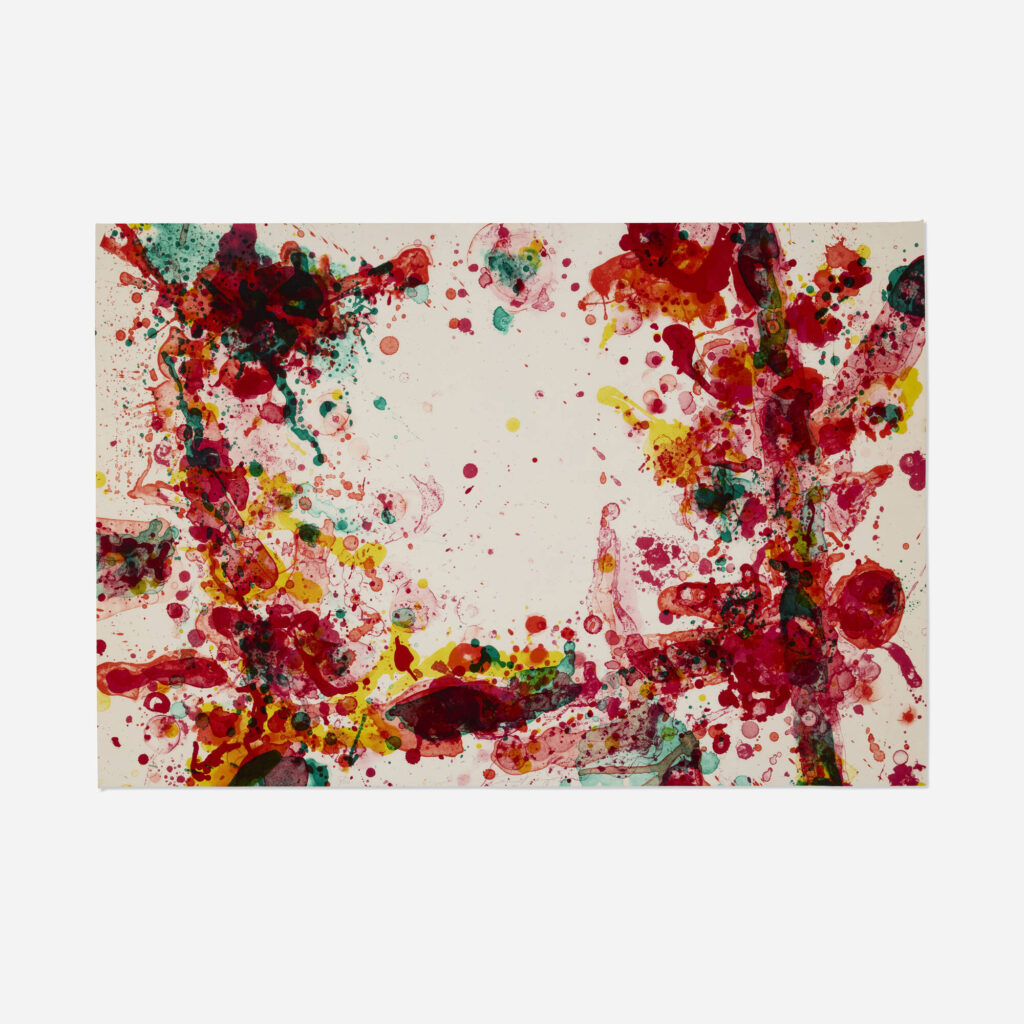
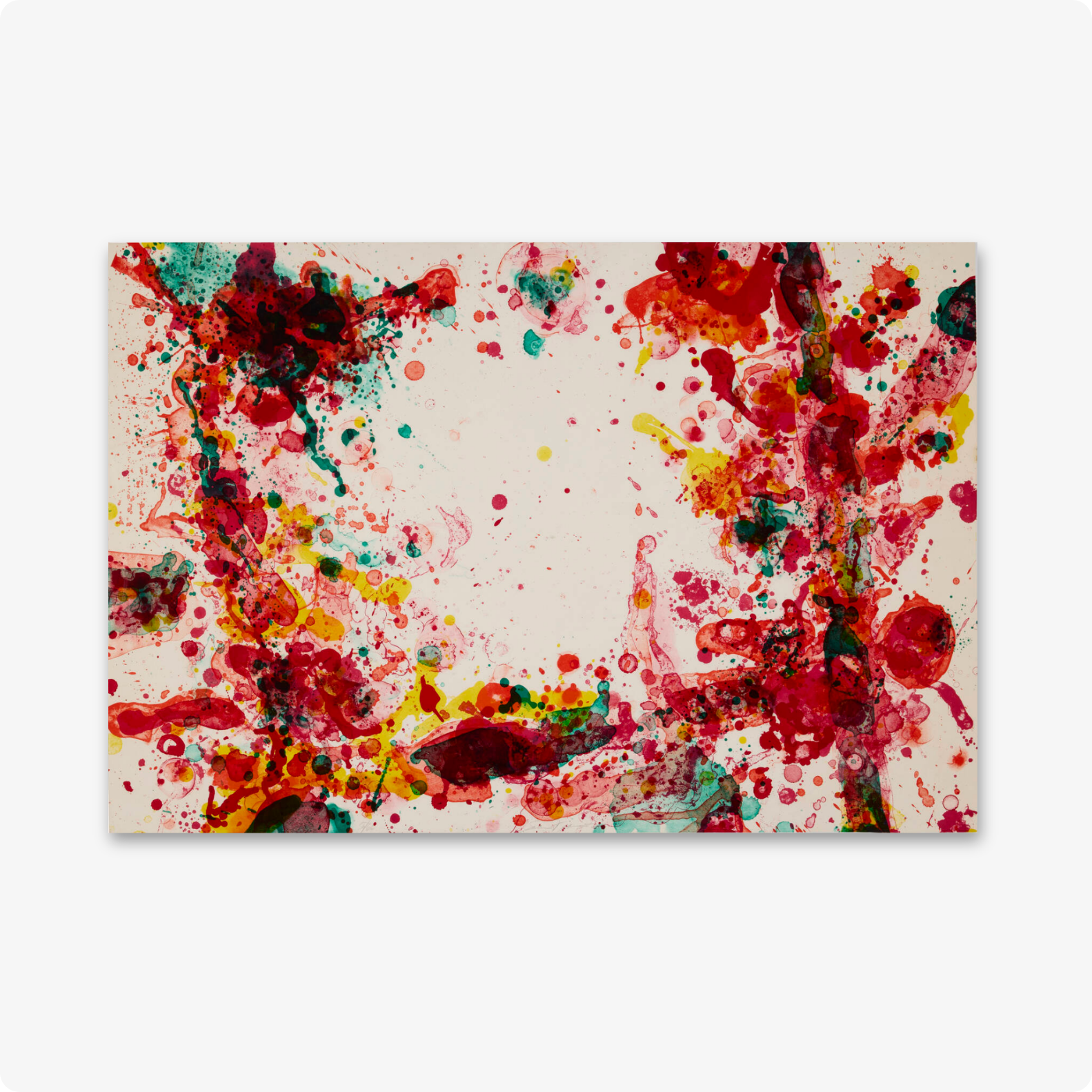
After an early period dominated by dark colors and an expressive use of black, Francis achieved international recognition with iconic works such as Big Red (1953), which was added to the MoMA collection. This consolidation of his position on the international art scene was followed by an evolution in his style. From the mid-1950s onward, his style evolved into compositions with greater formal and chromatic breadth. Under the influence of Monet, blue became one of his fundamental colors. Later series and international mural commissions confirmed his mastery of large formats and his ability to articulate open spaces. In these works, the center of the painting remains deliberately free, serving as a nucleus of experience for the viewer.
Marked by a constant struggle with illness, Sam Francis’s later work intensified in color and emotional charge, reaffirming until the end his conception of painting as a celebration of vital energy. His final works, created shortly before his death, confirm his extraordinary consistency and creative will, placing him among the great 20th-century painters.