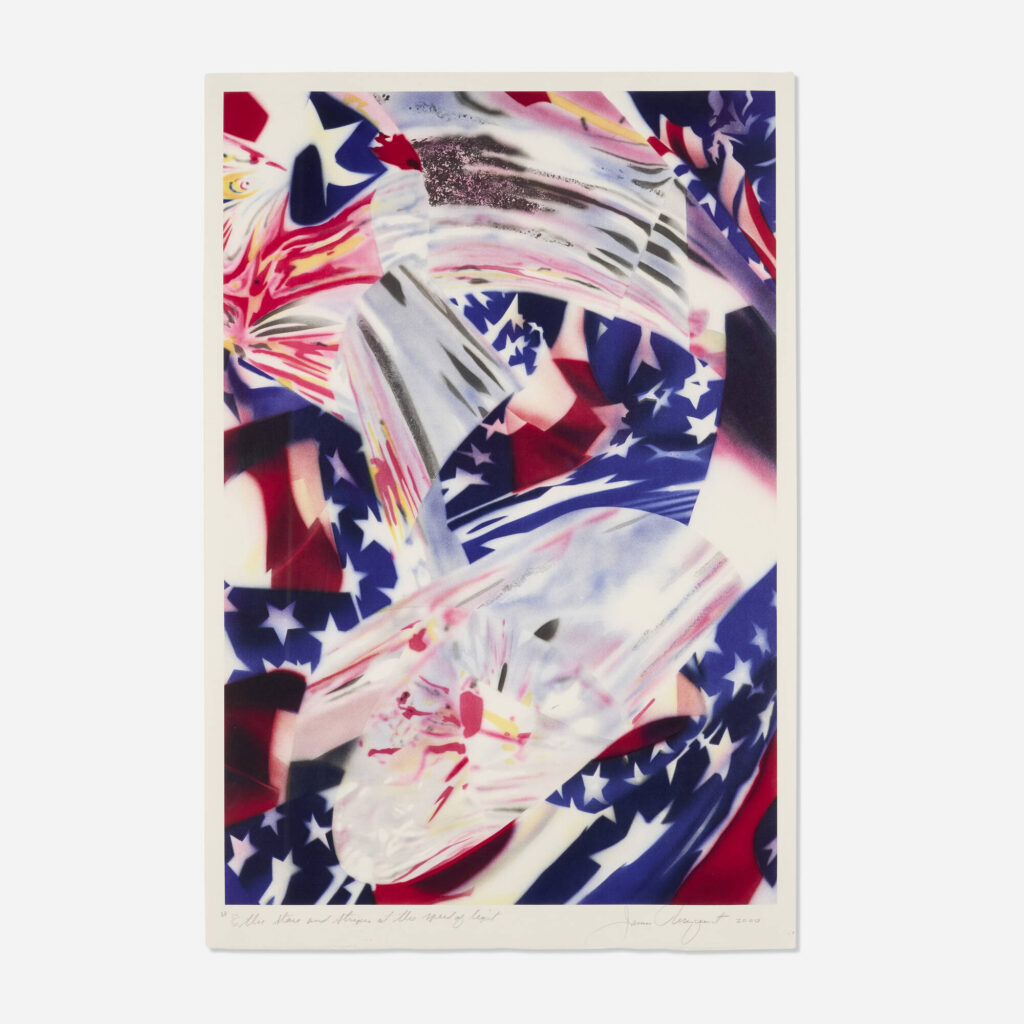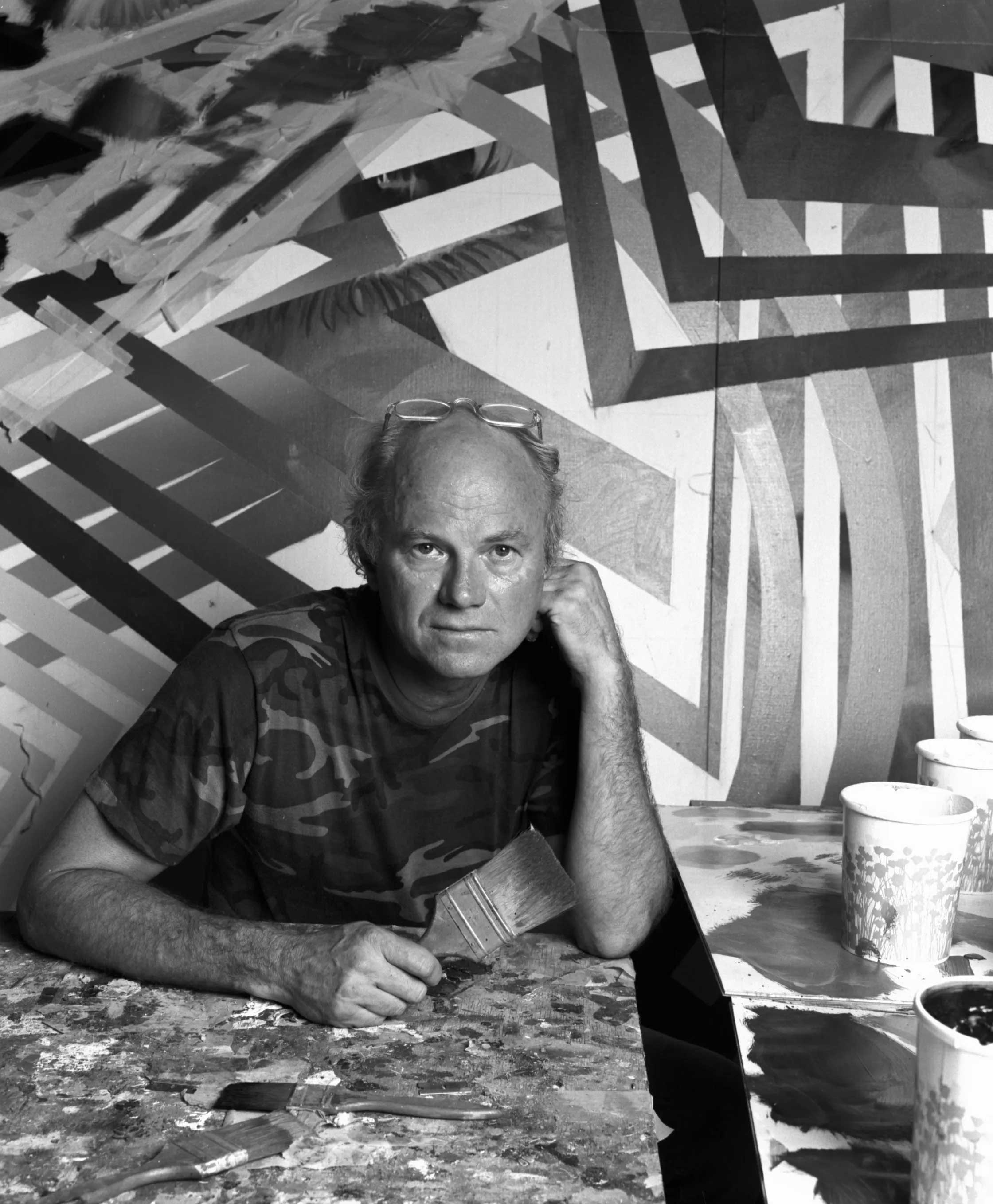
James Rosenquist (American, 1933–2017) was one of the most complex and sophisticated figures in American pop art. Initially trained as a commercial sign painter, he applied advertising’s visual strategies to art, including large format, technical precision, and the immediate impact of the image. However, Rosenquist did not merely celebrate consumerism; he used these resources to fragment contemporary reality and subject it to critical analysis.
“I decided to make pictures of fragments, images that would spill off the canvas instead of recede into it… I wanted to find images that were in a ‘nether-nether-land’; things that were a little out of style but hadn’t reached the point of nostalgia.”
This statement sums up his artistic approach: using cropped, enlarged, and decontextualized images that seem to spill off the canvas and are situated in an ambiguous territory between the current and the obsolete. Viewers must reconstruct their meaning.
After settling in New York City and studying at the Art Students League, Rosenquist joined the Manhattan art scene. He had his first solo exhibition at the Green Gallery in 1962, a pivotal moment in the development of pop art. From then on, his work was distinguished by a more complex approach than that of other artists in the movement, such as Warhol and Lichtenstein. He replaced direct iconicity with fragmentary juxtaposition.
This strategy reaches a monumental and critical dimension in works such as F-111 (1964–1965, MoMA), in which Rosenquist explicitly addresses political, economic, and social issues, thereby broadening the ideological scope of pop art. Inheriting language from both advertising and certain surrealist strategies, he constructs a personal and deeply analytical vision of 1960s consumer society, thus consolidating his place as a key and distinctive figure within the contemporary art canon.